
Large and Small
In this post we will take a vendor package out for a weekend of shows - first a “large” event in an events center arena-type space, then a country act on a mobile stage in a smaller indoor rodeo arena. We will pay close attention to how to use the same infrastructure (namely loudspeakers and processing resources) to achieve coverage goals in both spaces despite a 3:1 difference in audience capacity.
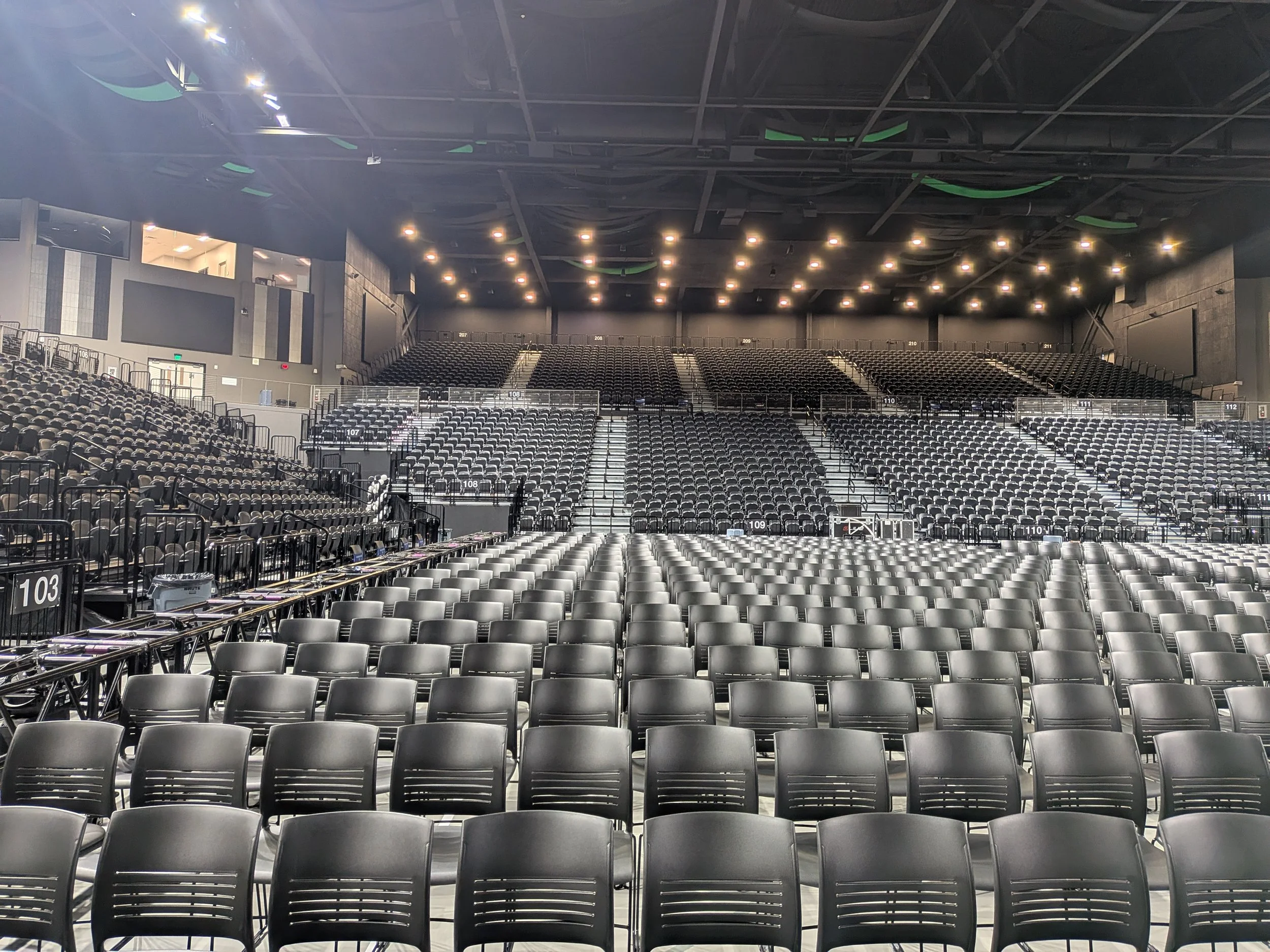
The arena space is quite straightforward - the vendor has allocated 12 per side large-format elements as well as 10 per side mid-format elements, sufficient for coverage to the 180° line, and the pair of 16-output processors one per side) means enough processing for 2-box resolution throughout.
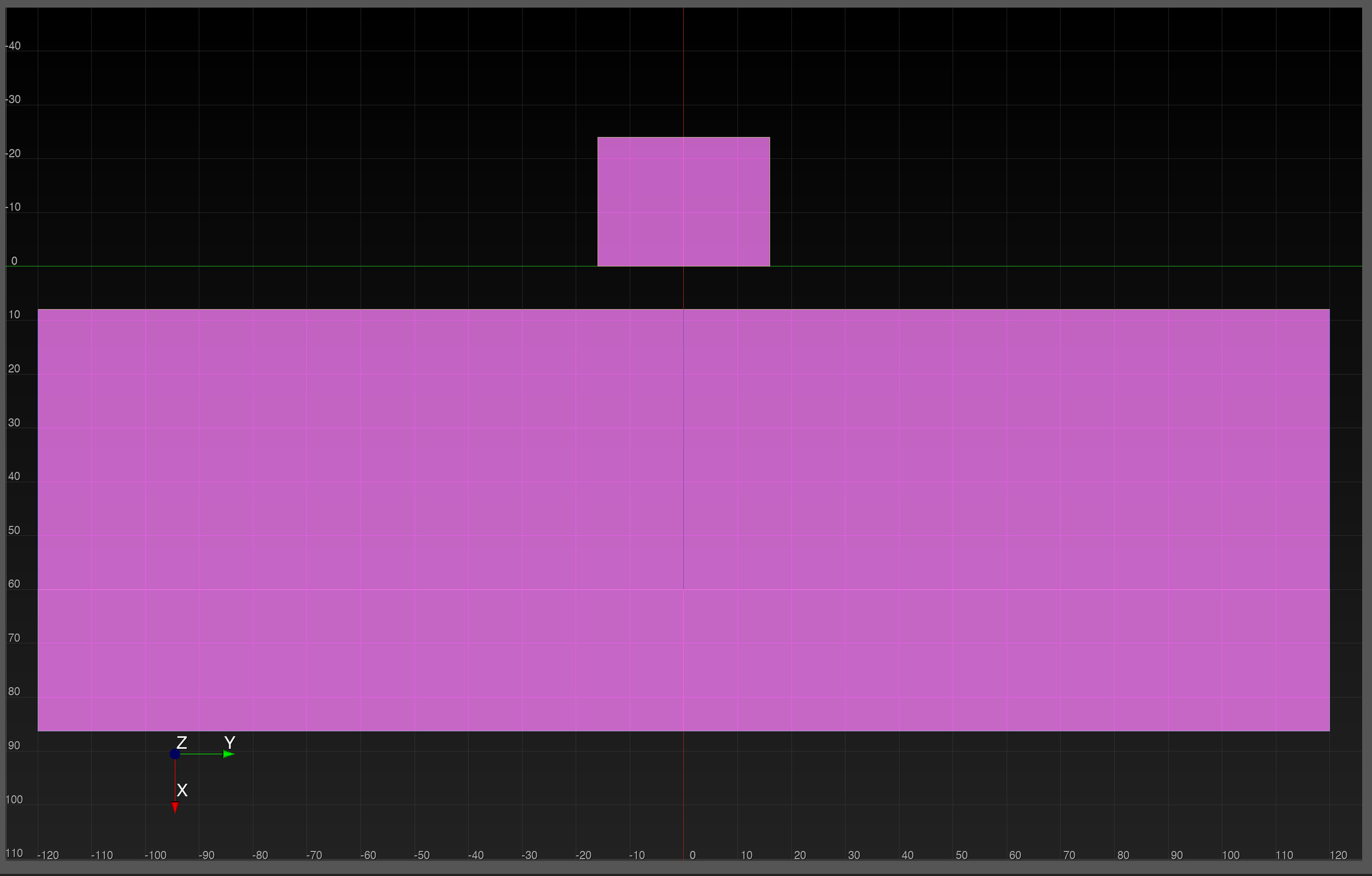
The prediction geometry is simple: a flat rectangle for the floor, plus an inclined plane for the side and another for the rear. We have a small, problem - the event would like to expand seating all the way to the upstage wall, which is about 220° of coverage. We need another hang.
Luckily we have some small format array cabinets on the truck for tomorrow’s gig, and the rigging company brought enough spare motors that we have something to hang them with, so the only wrinkle we have to work out still is fitting the new hang into the existing processing footprint.
This compromise in processing resolution is borne out of the nature of squeezing more self-amplified (but not self-processed) elements into the same footprint of available processing outputs. Of course more processing can be added, but at a cost. This is roughly equivalent to adding additional amplifiers to an externally-amplified loudspeaker system in order to achieve higher processing resolution. But in this particular case, the limitation is not one of budget, but instead simply availability: This is not a local event, we work with what we have on the truck.
We do have the flexibility to allocate those processing outputs however we desire - for example, moving to 3-element zones on the top of the main hang is a possibility. In this situation, it falls to the experience of the system designer to evaluate the mechanics of the design, anticipate where higher resolution / zone shading is most likely to be beneficial, and allocate the available processing accordingly.
We have been asked to trim rather high for sightline considerations, which means that if our splay angles are appropriate, we can expect to do minimal shading, and so are okay cheating our way through some larger zones on the side and 220 hangs.
I ended up preserving the two-box zones on the mains, both due to the large range ratio and because it makes the lo-mid steering much simpler (6 outputs per side). The subwoofer deployment was six per side, in three carts of two. Since I only needed the ability to delay taper the outer cart on each side, the inner and middle carts could share processing outputs, plus a single output for front fills leaves five outputs per side for the Side hangs and the 220.
We split side hangs into 3 zones in a somewhat unconventional way: top 3, middle 4, bottom 3, as due to the gentle seat rake I knew I would only need to shade the top and bottom extremes of the array, if at all. Finally, the 220 hang was split into two zones of 4.
Our second gig, the concert in the rodeo arena, is a much smaller audience area with simple geometry - a shallow section of flat ground followed by a single row of raked bleacher-style seating. Total depth is under 90 feet, but with a substantial 240 food width. That’s a shape that’s three times as wide as it is deep. Not all 180° seating geometries are created equal.
We will rely heavily on our side hang (outfills) to reach to the far edges of the audience area, but we must also pay special attention to the polar behavior of the subwoofer array, as this “ultra-wide but shallow” shape is not an easy one to accomplish with most typically accepted subwoofer configurations. Let’s start there.
Although we have 12 subwoofers on the truck (as six carts of two), that’s more than enough power capability as compared to the small- and mid-format full range enclosures we’ll be deploying. (The maximum achievable trim of around 17 feet means we will leave the large-format cabinets on the truck.) Plus, the load-in and loud-out push across the venue’s dirt floor means minimizing the amount of heavy things that need to be pushed across it as much as we can. So we will see what can be accomplished with 8 subwoofers (4 carts of 2) and only dip into the extras on the truck if deemed necessary.
Wide dispersion is possible with a broadside configuration (evenly spaced stacks across the front of the stage) when we have sufficient quantities, see most stadium designs that stretch to the 180 line. However, this proves rather unsatisfactory with only four carts, even with physical toe-out and a reasonable amount of delay taper on the outer positions.
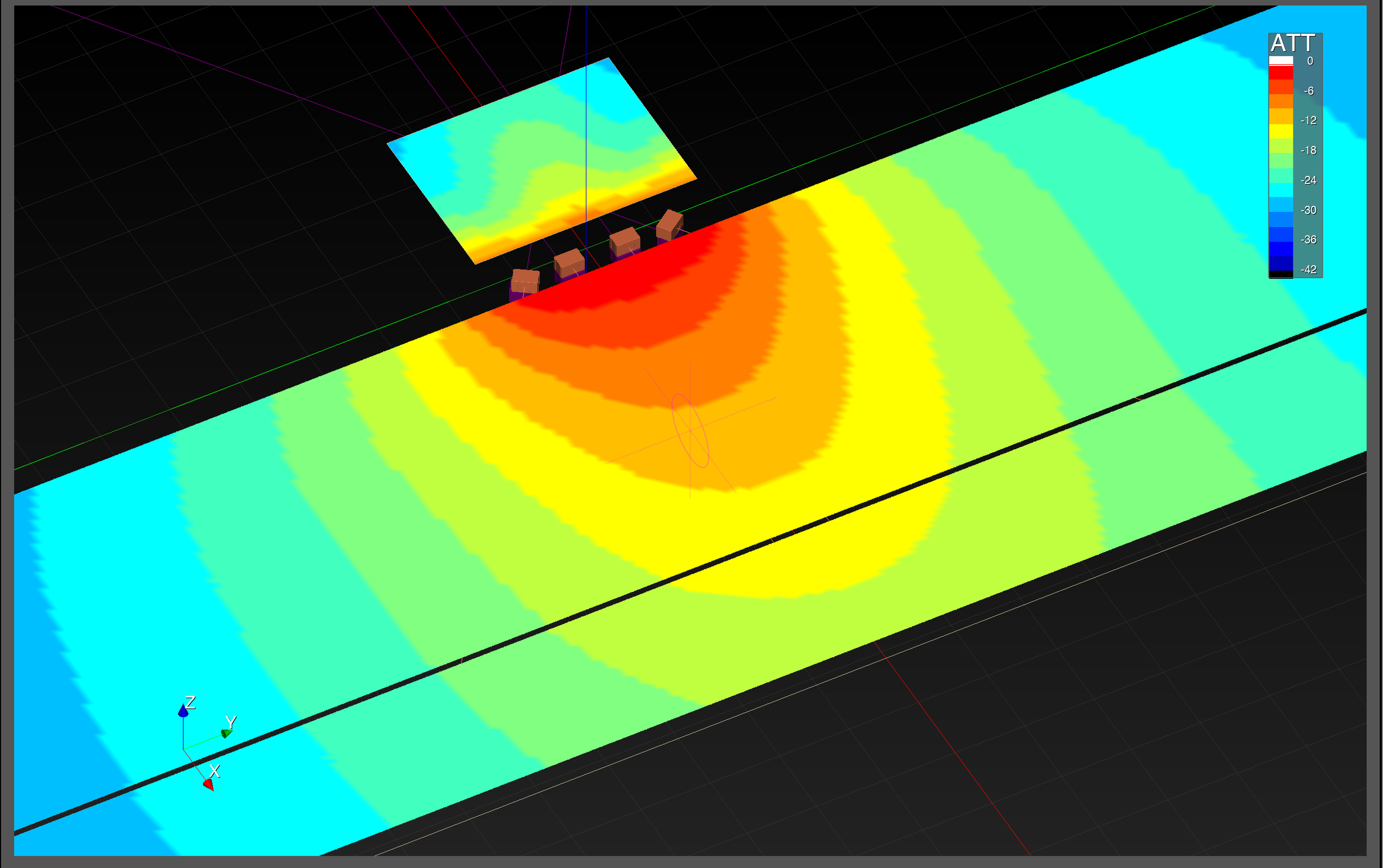
Another approach is required here: Divide and conquer. Cardioid behavior is desirable for multiple reasons. First, I prefer to control directivity whenever possible, across the widest bandwidth possible, as a general principle. (“Point the loud side towards the audience,” indeed.) Second, mobile stages have a notorious knack for vibrating in all sorts of unsavory ways and cardioid sub deployments greatly lessen the annoyance factor here. Third, cardioid directivity will help us achieve the extreme width necessary for this audience geometry. As we saw in Roll Your Own, the directivity helps reduce the interaction between Left and Right which will achieve a truer iteration of the desired coverage shape.
We will split the audience area down the middle, revert to a L/R sub deployment, and then when we’re done, electronically decorrelate them to minimize the interaction between the two sides. So if we can make half the shape successfully, the decorrelation should allow us to make the entire shape when both sides are turned on.
Our sub carts are still stacked as Front-Back from the previous gig, but we can quickly reconfigure them to all point forward, and then deploy them in an inline gradient array (looks like endfire, but it’s the upstage cart that is delayed and polarity inverted). Although endfire with already-cardioid elements is possible, this configuration gives us a bit more efficiency in the forward direction while preserving very good rear rejection.
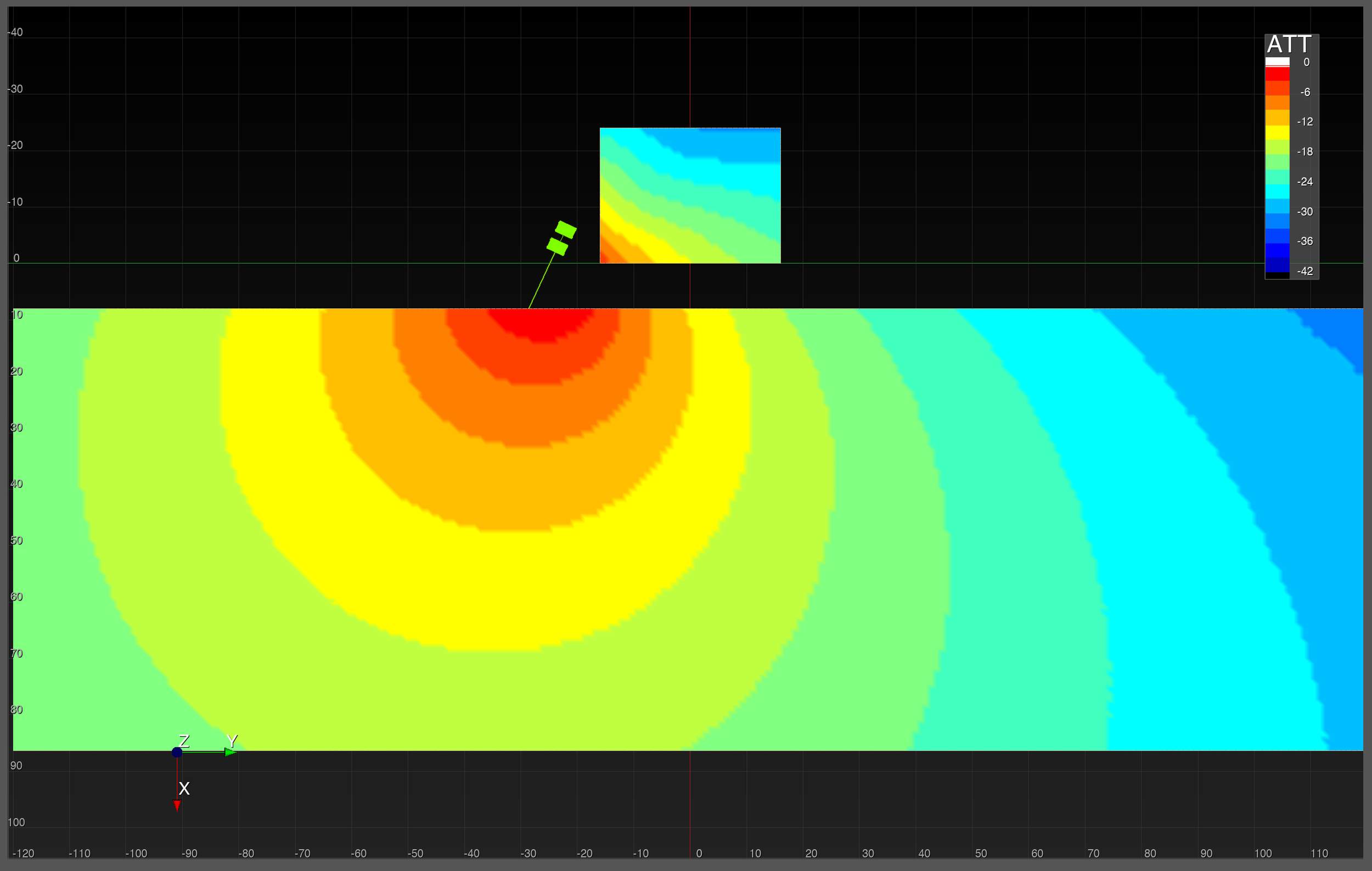
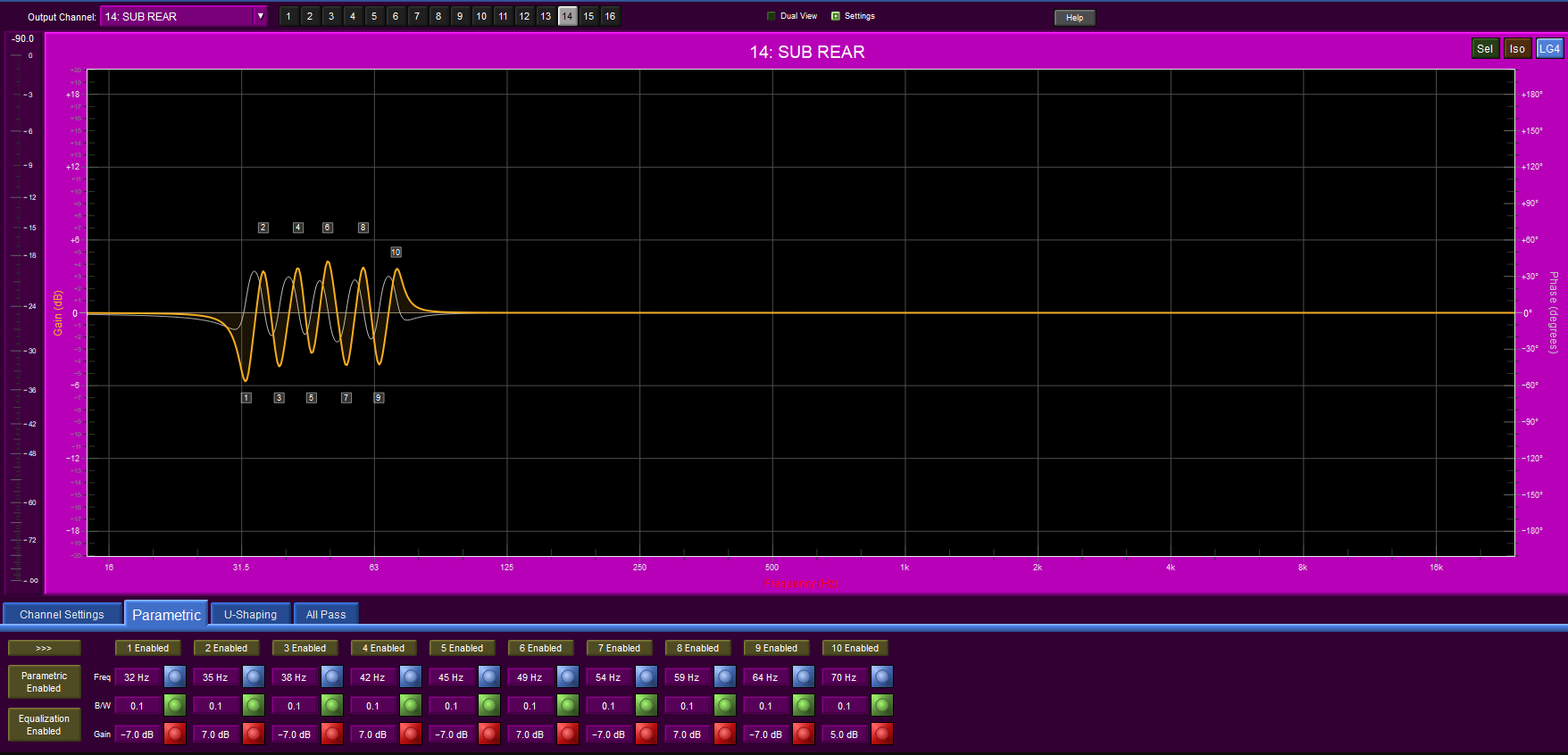
A 25° toe-out simultaneously cleans up the stage deck and helps spread the output out into the corners of the audience area. This can be fine-tuned (i.e., the spread can be opened or closed) by adjusting the physical toe. The decorrelation can be applied using all ten GALAXY filters on each side of the stage, as the front-end processor can be used to do the overall sub EQ. The filters were generated using my calc spreadsheet, available on the Resources page of this site. one side is shown below, using a minimum bandwidth of 0.1 oct and a gain spread of ±7 dB.
Now that we have the low frequency sorted, we will match it with the arrays. The available trim of the stage means we can hang eight mid-size cabinets as mains (invert the motors for a little extra trim), and we have crank-up lifts for eight small-format cabinets as outfill. A gentle application of low-mid all-pass steering helps keep the spectrum consistent from front to back.
Given that we have the same processing resources available, but a much smaller loudspeaker count than the previous event, we will treat ourselves to single-box resolution on the main hangs. Although only very gentle shading was needed during alignment, it’s always nice to have, and the higher resolution increases the transparency of the beamsteering as well.
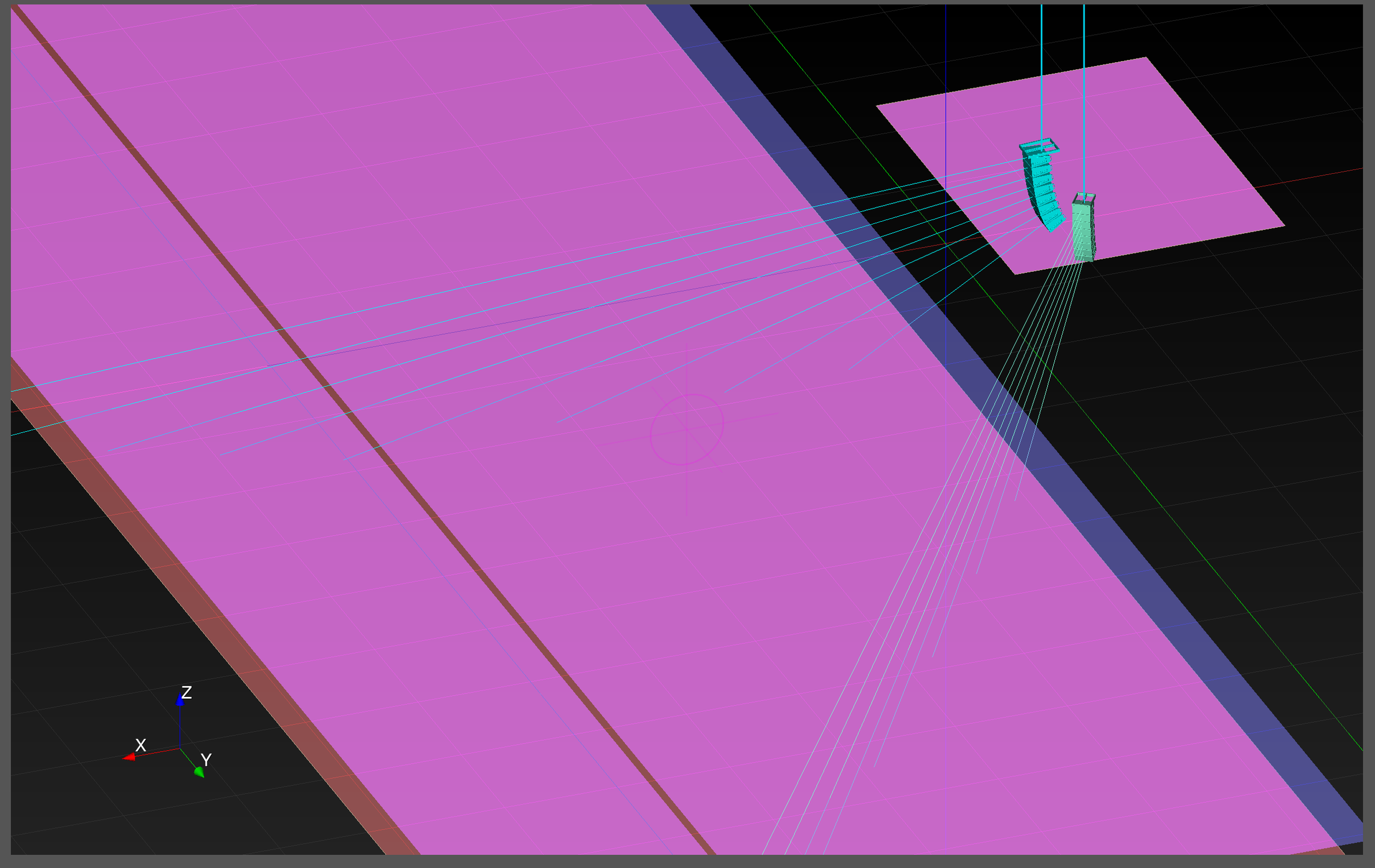
In an arena, the side hangs don’t need to go as far as the mains. In a typical “clamshell” style amphitheater, the throw distance is usually about the same. In this configuration, the side hang throw is actually further than the mains. Thus, this configuration is “backwards” - all other things being equal (cabinet quantity, range ratio, vertical coverage requirements, etc), we should be using the larger and more powerful cabinet for the longer throw.
Why didn’t we do that? Often, there are important factors besides the technical considerations, and this situation is a good example. Sometimes, expectations still reign supreme. If we do not have an established trust with the mix engineer, it is best to avoid things that might inspire a lack of confidence. Also, the artist’s mix engineer had specifically requested the medium-format cabinet from the vendor for this event, so if they show up and they’re aimed somewhere else, they are not likely to be pleased. In practice, the system will be operated well within its output capability, so any disparity here can be easily addressed with a few decibels of gain.